
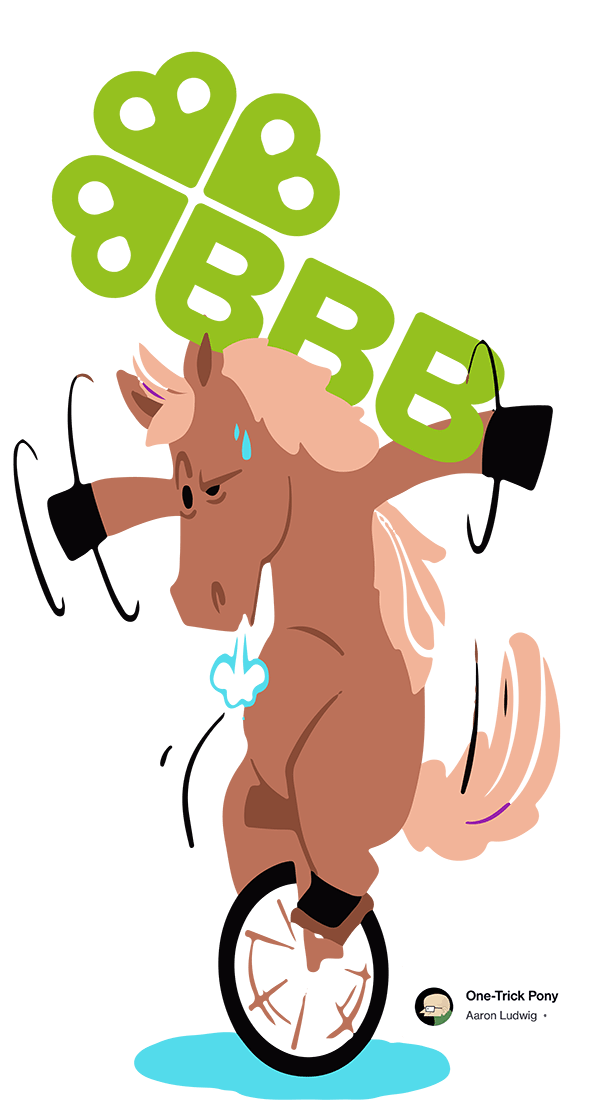
…Or how human behaviour will corrupt mutual trust; a storytelling factor.
I’ll try to keep this simple, although I probably won’t succeed… I think that we as human beings are currently losing grip on mutual trust. Trust is something reached in a process of interaction. A kind of bartering. It’s how we maintain balanced living conditions as a socialising species. The average person will not consider these kinds of existential questions too deeply, for life is too short and relatedly there are more important matters occupying their thoughts. But basically, success seems to come from presenting oneself to others as a one trick pony to be enjoyed by everyone. It doesn’t even matter if this trick might be slightly offending or harmful to others, as long is it’s entertaining and appears to be genuine. As such, in the Netherlands there’s created an entire political party around a singular person, being an ‘influencer’.
Basically this ‘one trick’ should fit within the stories individuals tell themselves, about what their life is about and how this is worth their while. This is why we have influencers explaining simplified facts of life and how problems always need to be fixable. Besides and hence, to them complexity is an illusion. Of course they have a behavioural context supporting these kinds of quests, like people who think alike, or pretend to think alike, seeing a way to promote their own agenda. One other mayor support structure for the individual influencer would be a relatable ‘provenance’ to their cause. Most of the time it is something that’s silently grown as a result of the influencer’s behaviour itself. The main trait an influencer must have, is little scruples in taking ownership of what’s not really theirs.
Interestingly, ‘ownership’ is something people can often unreasonably claim, after which it will remain undisputed. This is relatively easier for those who are already recognised as ‘of importance’. People recognised as such will get propositions for additional possibilities more often too, as they are considered trustworthy. Intriguingly, they should actually be considered less so, because they’ll probably take advantage more easily. Yet, taking advantage is more accepted because of their status. It’s an interactive self supporting process.
So, how does the behavioural routine I just described and which can be observed quite generally, threaten mutual trust by influencers? Firstly, it creates classes between people we measure in status. Although status isn’t something well defined and not based on any kind of reason, there are unwritten relational differences between people connected to the stories they represent. An idol, a public figure, someone related to a position of wealth, nobility, the latter even containing the suggestion of being ‘nobel’, will be able to take ownership more easily and less disputed than others. It stands to reason however that this is still a mutual interaction. One can take only when allowed, which means it is implicitly given.
Influencers however, are a virtual ‘entity’. So, the second threat is because they do not really represent themselves. They represent a part of a consumeristic routine. They are an agent to those who built communication programs or devices meant to promote consumer behaviour. This way consumer behaviour and subsequent producing behaviour have intricate relations with a human representative of a made up storyline. A storyline that will eventually be supported by public relation businesses who build up the narrative even more. For influencers there is no real mutual interaction pertaining to ownership.
The influencer’s status is of a virtual nature, which means their ownership is not real and effectively ‘by proxy’. For them, behavioural relations to ascertain trust therefore will be empty, except for the trick they represent. In case of the current Dutch political party built around a certain ‘figurehead’, this means that all reflections in debates, voting rounds, media presentations and other opinions expressed by this person are empty and will only represent parameters of the story built for them as a proxy. Trust may seem to apply and the usual barter to reach a balanced situation appears to be happening, but the ‘figurehead’s’ position is empty and the opposition will be met by its own reflection.
The moment we realise influencers to be these empty one trick ponies, it will make us less trusting to each other, but not necessarily the influencers themselves. For we believe stories rather than reality as our mind is a storyteller itself, but life is not.
 divorytaur